

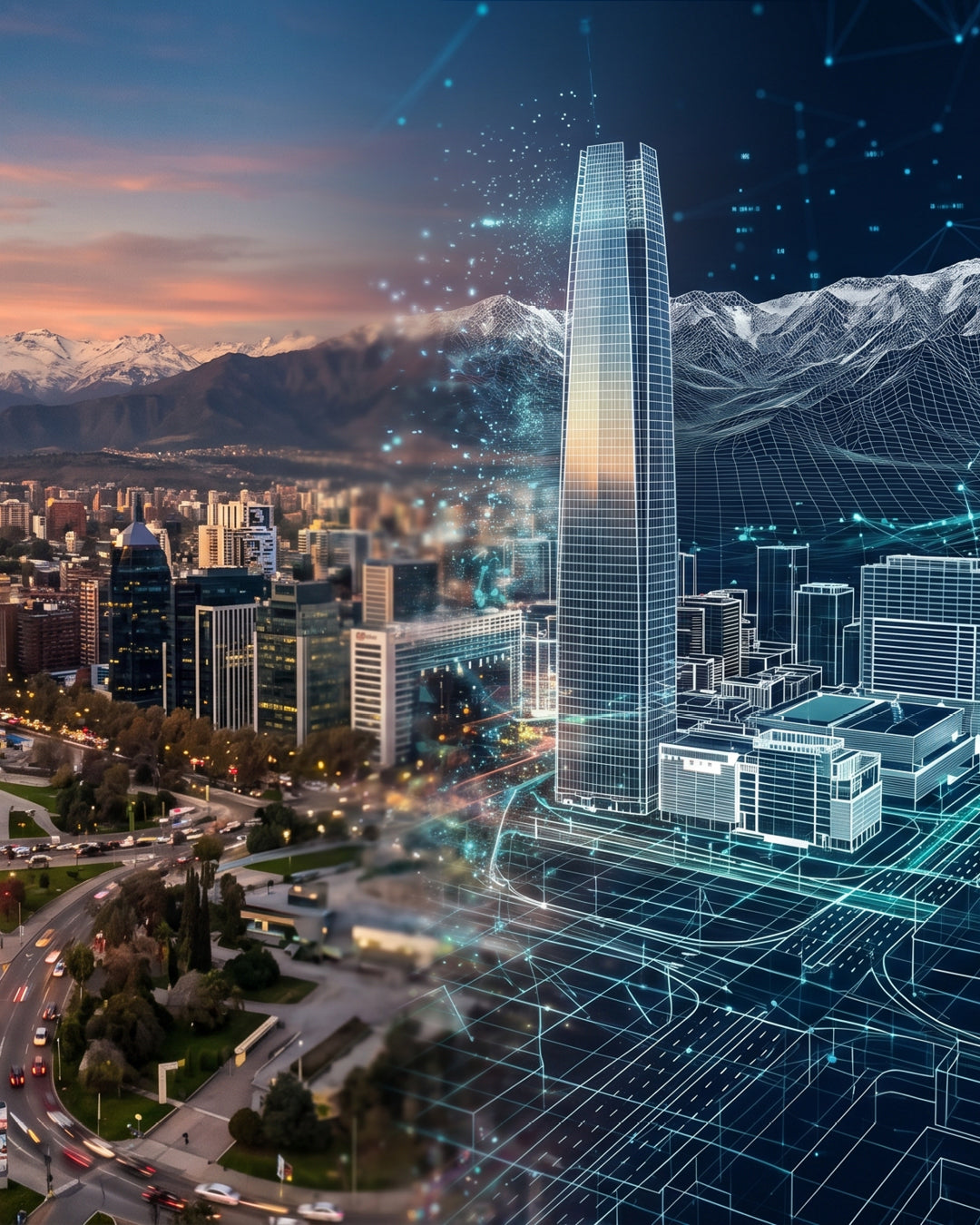
What is Gaussian Splatting?
The Gaussian Splatting (3DGS) technique is transforming the representation of 3D environments by modeling scenes using Gaussian representations that integrate geometry and properties such as color and opacity. Unlike traditional methods based on point clouds or meshes, this approach uses optimized splats, allowing for continuous representation and achieving more faithful reconstructions and more efficient rendering.
The implementation of Gaussian Splatting constitutes a significant advance in the digitalization of environments, by integrating high photometric fidelity with computational efficiency in the processing of graphic data. Unlike traditional methods, this technique allows for the reconstruction of complex scenes with astonishing precision in critical details such as transparencies, reflections, and thin structures, eliminating visual distortions common in classic photography.
Its main benefit lies in its real-time rendering capability, which allows navigating high-resolution digital twins with complete fluidity on conventional hardware. Currently, its use is key in strategic sectors, from industrial inspection to drone photogrammetry:

Reality Capture: Gaussian Splatting in Lixel Cyber Color
XGRIDS, thanks to its Lixel line capture systems which integrate LiDAR sensors and RGB cameras, allows generating hybrid models of high precision and realism. Through the use of Lixel Cyber Color software, it is possible to represent environments with high density and visual consistency, optimizing processing in 3DGS and resulting in continuous scenes with a very high level of realism and representativeness.
This technology has various applications in different areas of industry, including:
- Digital Twins and Industrial Inspection
- Architecture, Real Estate
- Cultural Heritage
- Virtual and Augmented Reality
Drones and UAS: Gaussian Splatting in DJI Terra
In recent years, DJI Terra has established itself as one of the most advanced software solutions for 2D and 3D reconstruction. Its ability to process complex data flows from drones, whether through high-resolution photogrammetric sensors or LiDAR systems, has positioned it as a fundamental tool in workflows that demand an accurate representation of captured surfaces.
- Improved color restoration, with greater visual fidelity
- More realistic representation of vegetation
- Detailed reconstruction of fine structures
- Faithful representation of static water surfaces, transparencies, and reflections in glass


Are you looking to delve into the technical fundamentals and operational advantages of this new 3D modeling technique?
GEOCOM will dedicate the entire month of May to the analysis of Gaussian Splatting. Through a series of two technical webinars, we will break down the fundamentals and applications of this methodology, providing the theoretical and practical basis necessary for professionals looking to lead the transition to the new frontier of three-dimensional modeling.
-
Gaussian Splatting Webinar in DJI Terra / Thursday, May 7th - 11:00 hrs (GMT-4)
In this Webinar developed by GEOCOM's UAS area, we will explore the implementation of Gaussian Splatting in DJI Terra software. We will analyze how this methodology optimizes the generation of 3D models, providing a more faithful visual representation of reality compared to traditional models.
-
Webinar From the real world to the digital environment / Tuesday, May 26th - 11:00 hrs (GMT-4)
In this webinar, we will explore how Gaussian Splatting, along with the integration of XGrids' Multi-SLAM technology, is redefining the field of 3D rendering and reconstruction, enabling the generation of ultra-realistic representations with a higher level of efficiency and performance.
Compartir:
[WORKSHOP GEOCOM] Incorporating Trimble RTX into GNSS networks
[Webinar GEOCOM ] Del mundo real al entorno digital